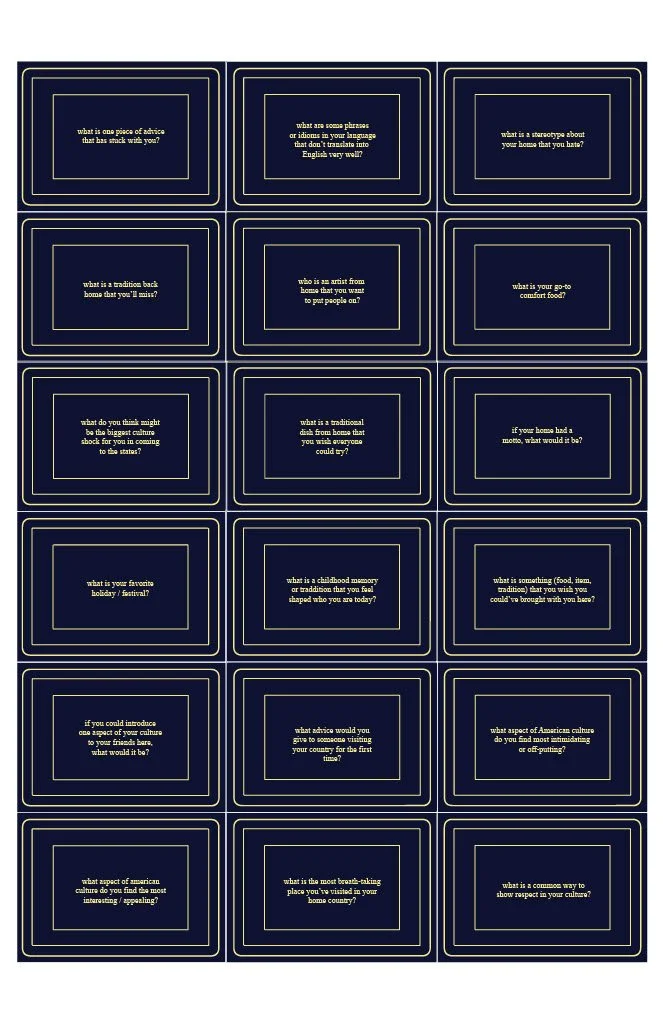
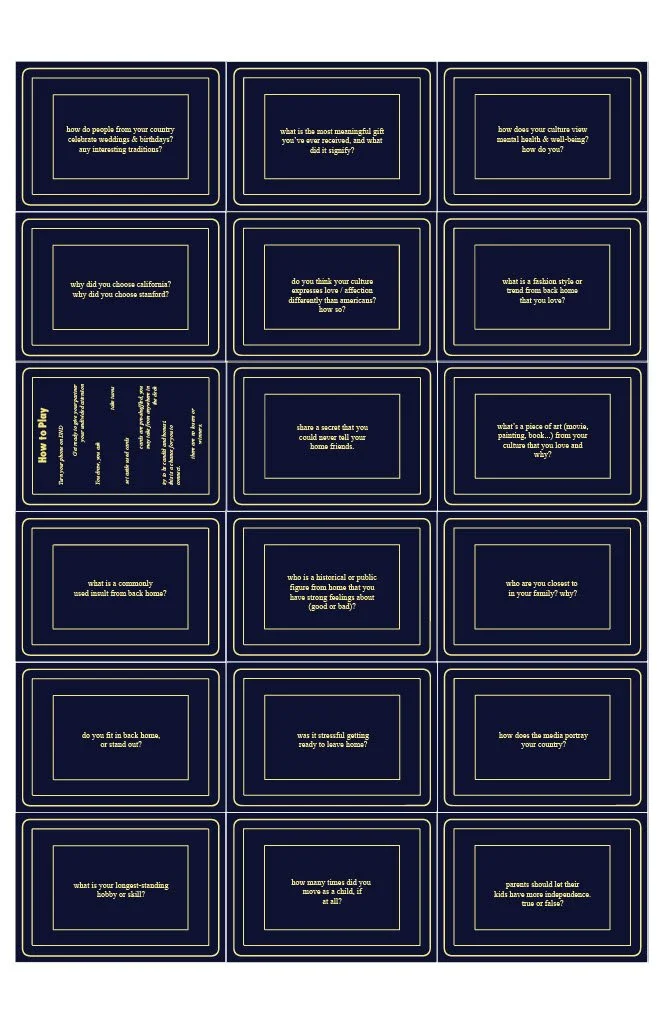
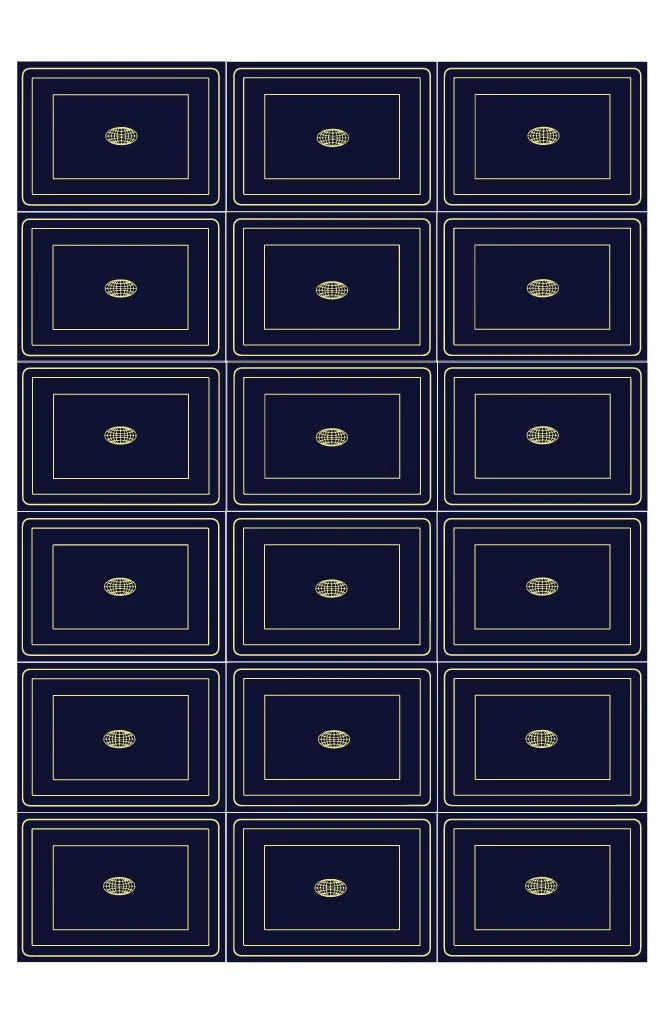
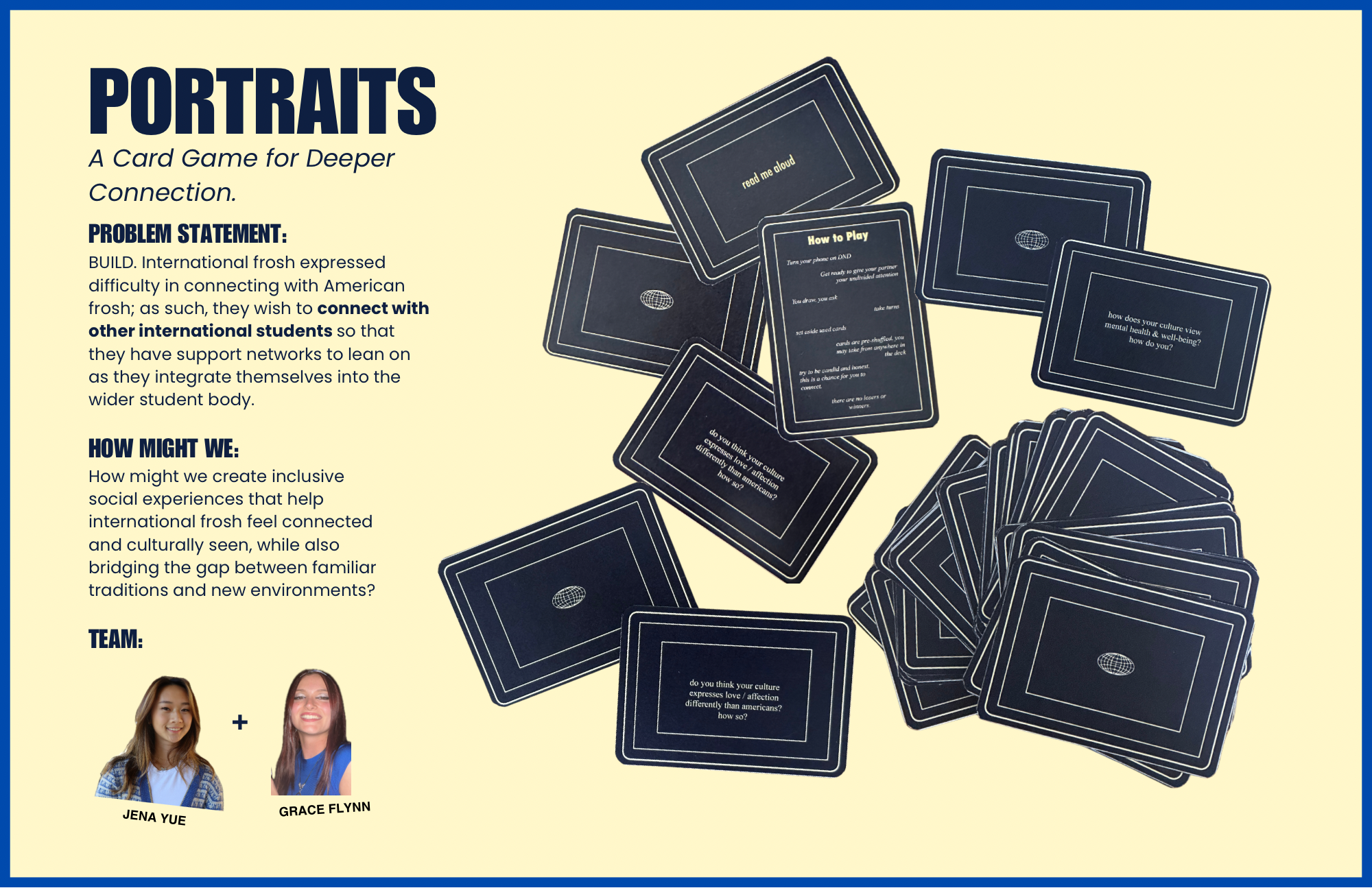
“PORTRAITS CARD GAME”
Product Design, based on User Interviews and Testing
COLLABORATIVE PROJECT
Adobe Illustrator Designed Card Game to Enable International Stanford Students to Connect and Build Community
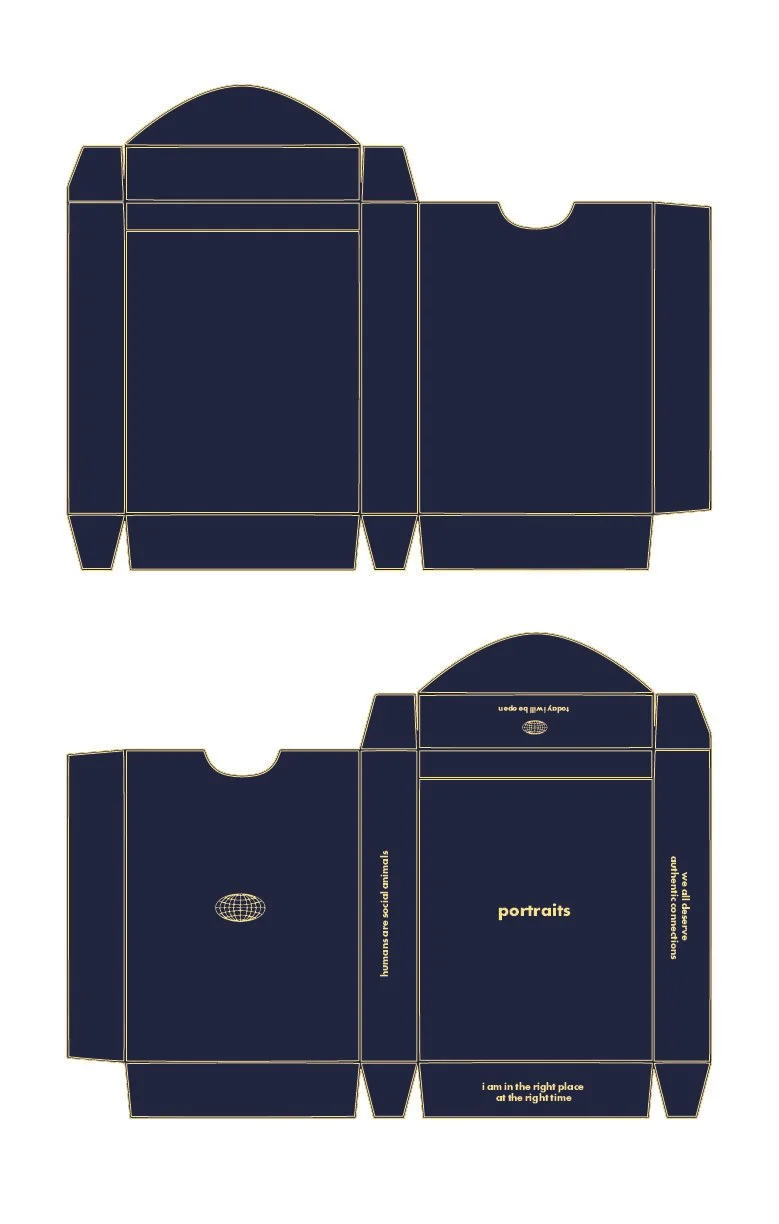
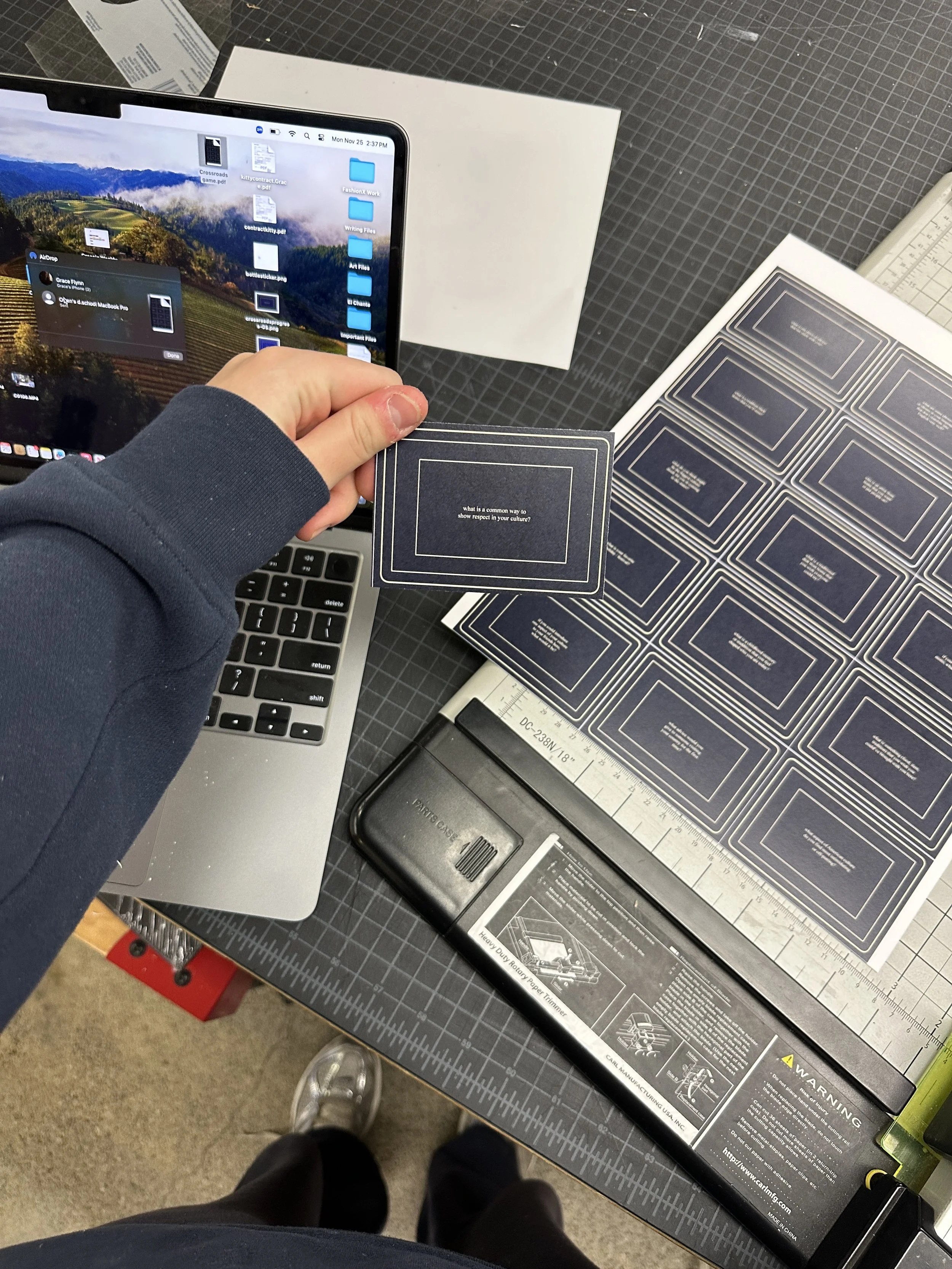
My key contributions to this project included: user sourcing, testing, and interviewing, solution conceptualization, product design (Adobe Illustrator), product development, physical prototyping, and pitching to potential clients.
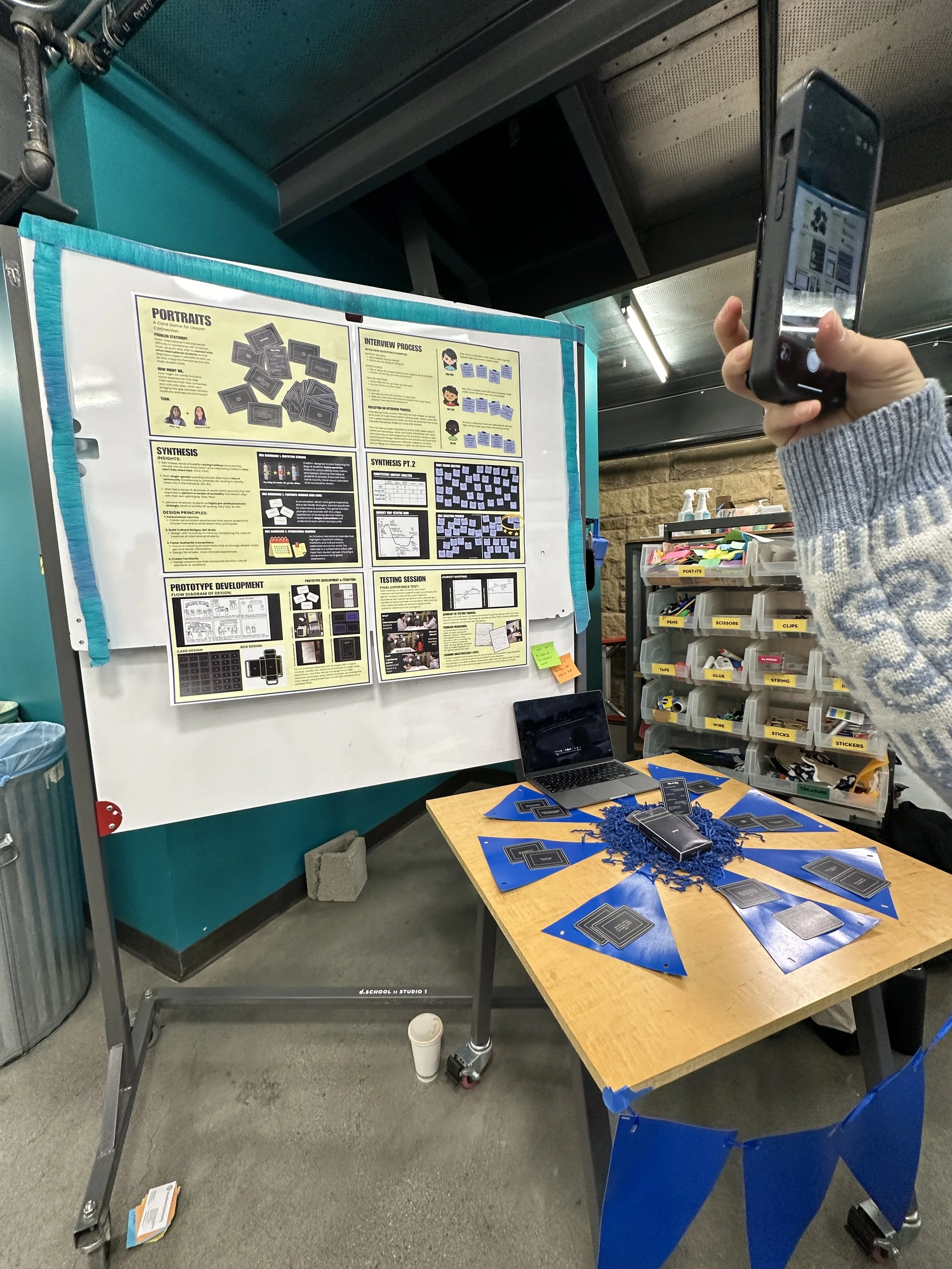
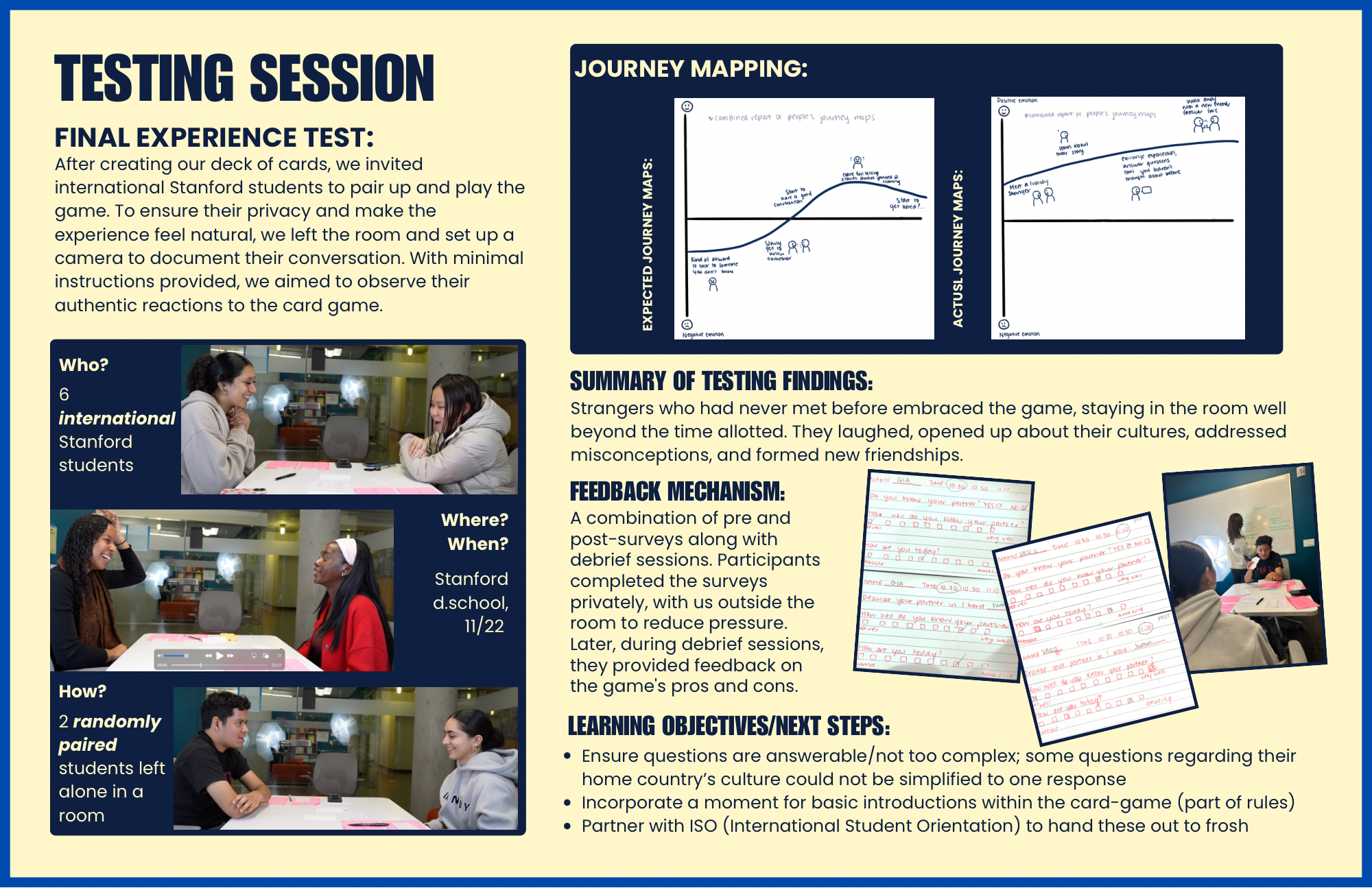
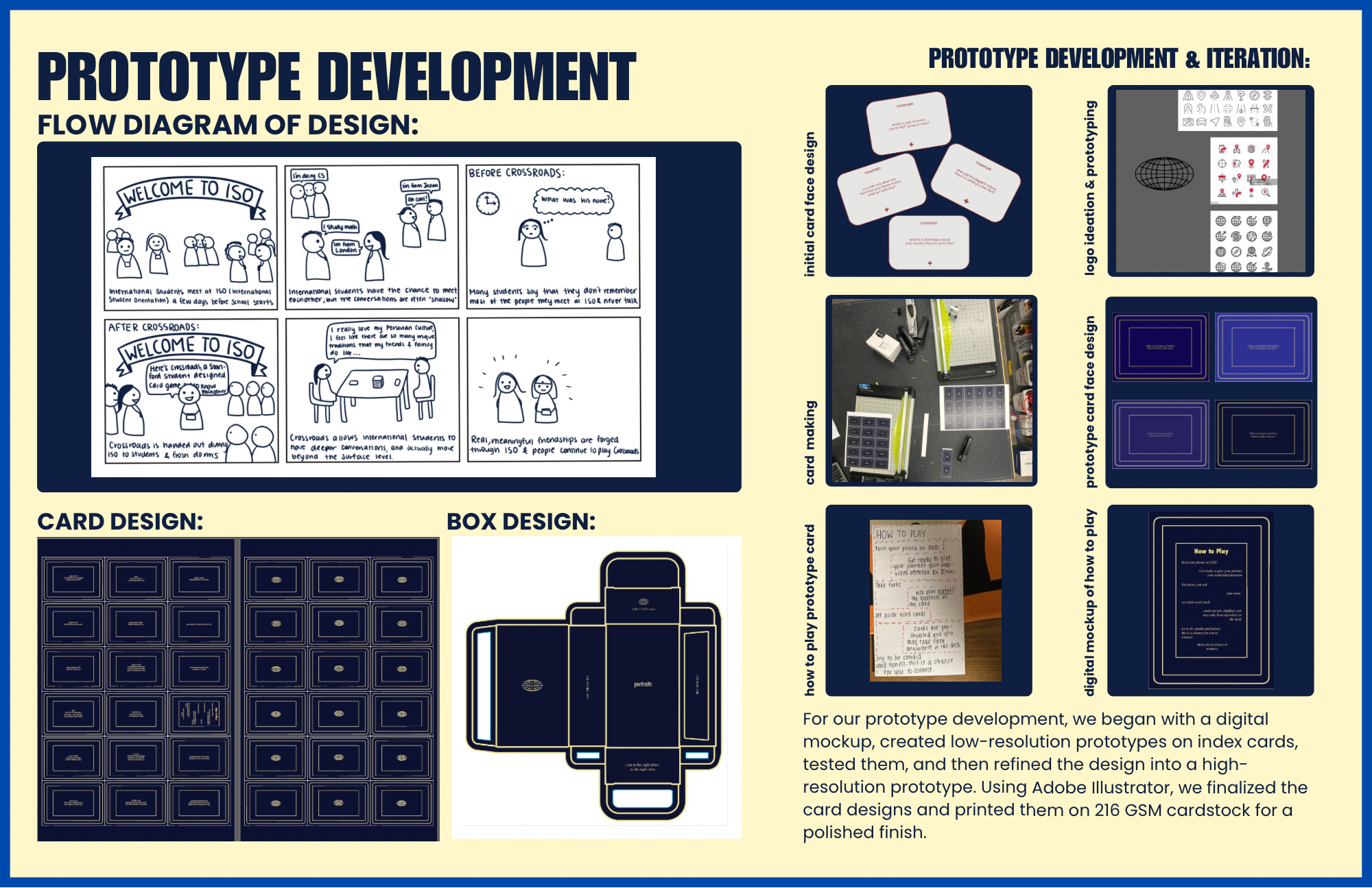
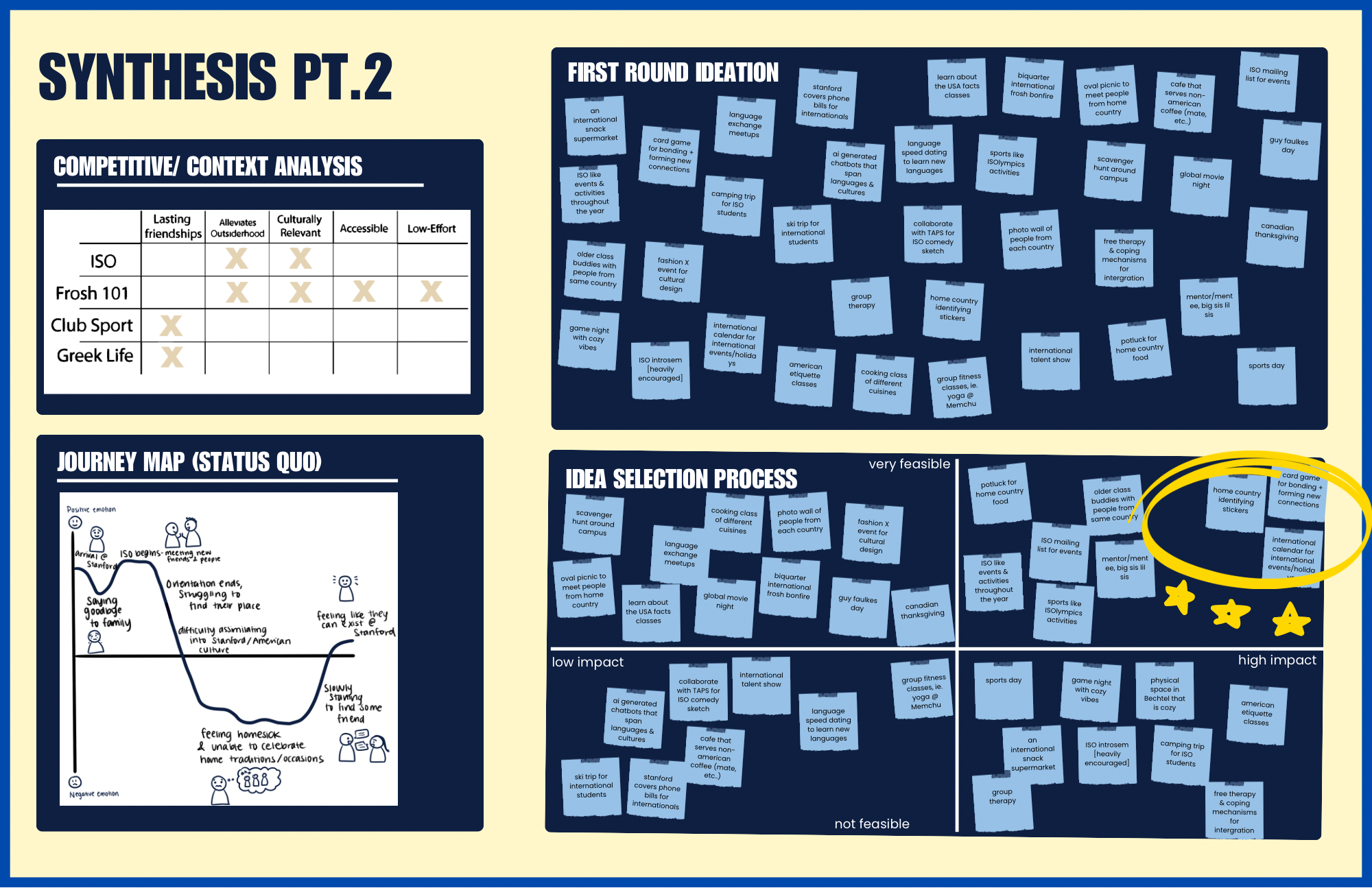
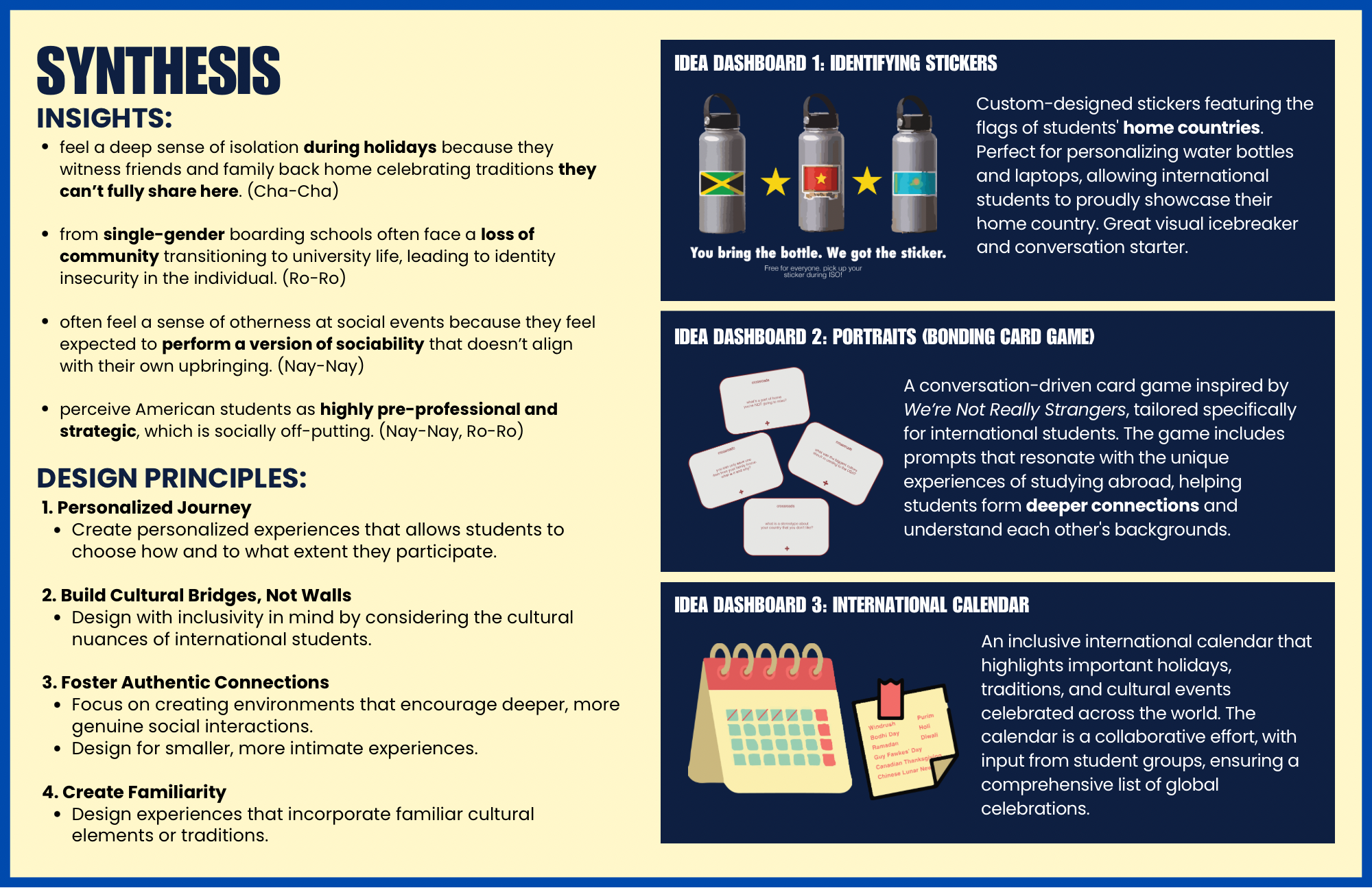
See below the journey map of how we came up with Portraits, and the user testing video I produced that was shown to clients during our pitch.
User Testing
Process Breakdown
My partner, Jena, and I were tasked with selecting an under-represented demographic at Stanford and conducting user interviews to see if there were any pain-points they had in common which we as Design students could treat. We conducted non-leading interviews with pragmatically phrased questions, so we could get unbiased answers from our interviewees.
They all mentioned one thing - feeling like they existed ever-so-slightly on the outskirts of the prevailing American population in the undergrad student body. We listened, listened again, and then again. This need persistently came up.
We spent a few weeks devising potential solutions to this problem. After working through our rough ideas, we went back to our users and had them try out our prototype solution.
What was our solution? How did we land on it?
The reality is that overengineering social bonding is a symptom of what I call “silicon valley syndrome” (essentially, being detached from the actual wants and needs of the community and just wanting to, say, build an app that nobody will end up using). This is what we kept in mind:
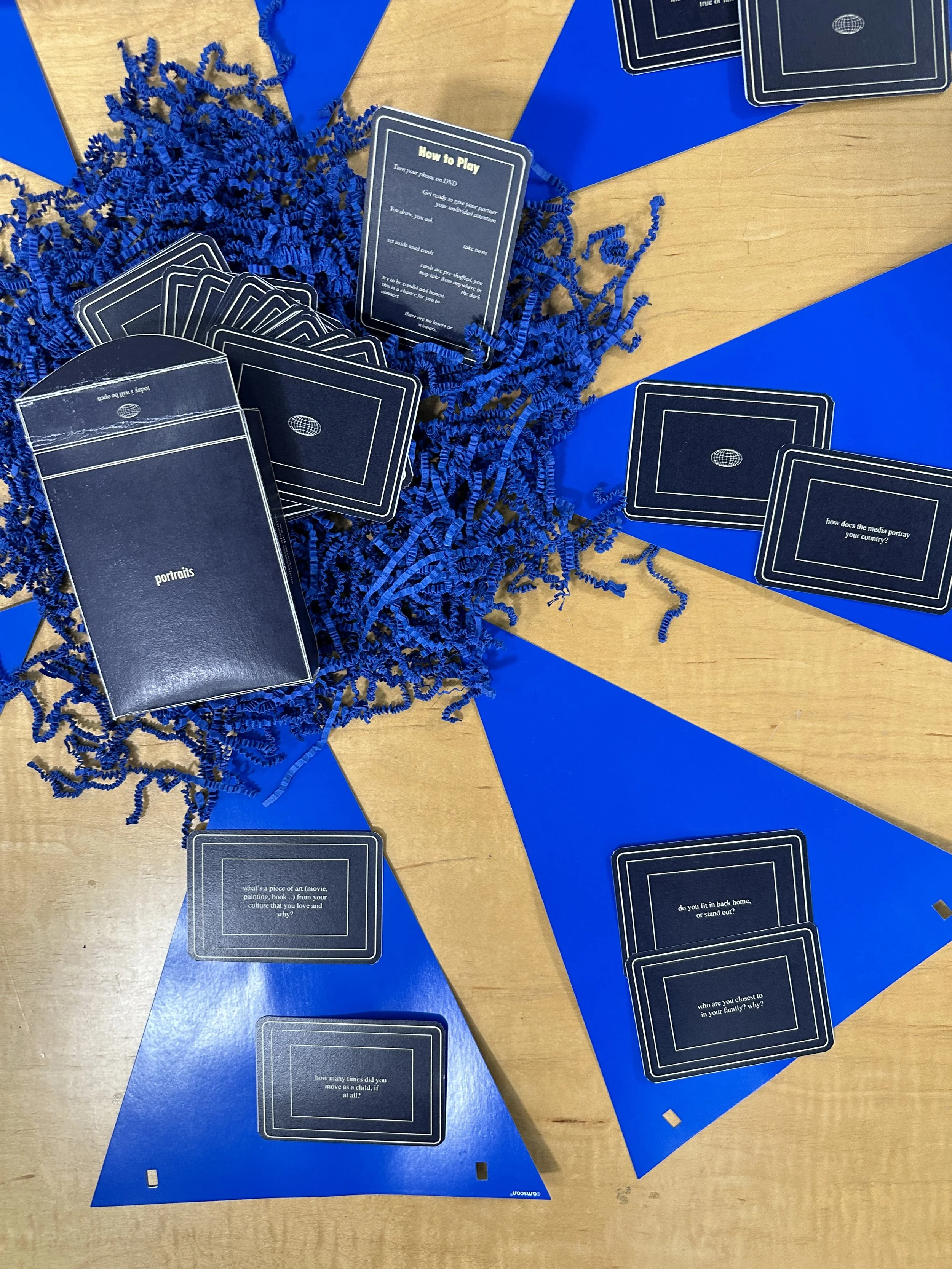
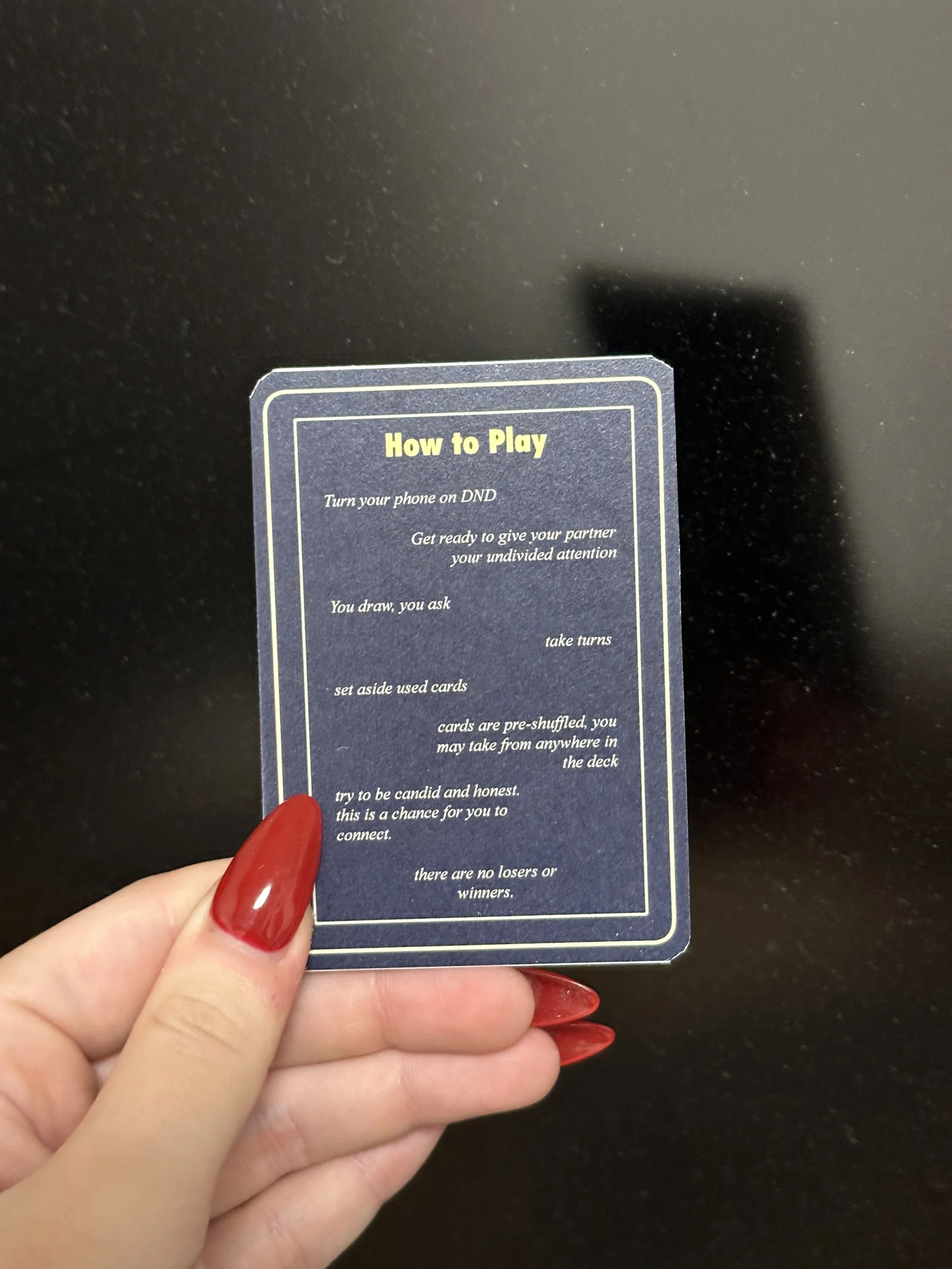
Our users were in need of a way to connect with other international students. They wanted more cultural visibility, and more social tools geared towards their demographic. How to serve them? Make a low-barrier, casual party-game that they could easily bring to social gatherings or late-night dorm hangouts. A card game was the best fit for these needs.
We researched potential comps and then distilled the best parts of each in order to make our own product. We then pitched our need-finding solution to the Director of the Office of Student Engagement, who later followed up with us about wanting to include our product in the “Welcome to Stanford” goodie bags that every international student gets during ISO (International Student Orientation, which happens a week before the rest of the student body arrives each September).
This was a great experience that taught me a lot about need-finding, user interviewing (particularly, how to conduct non-leading interviews), user testing, and helped me sharpen my physical brand design skills.